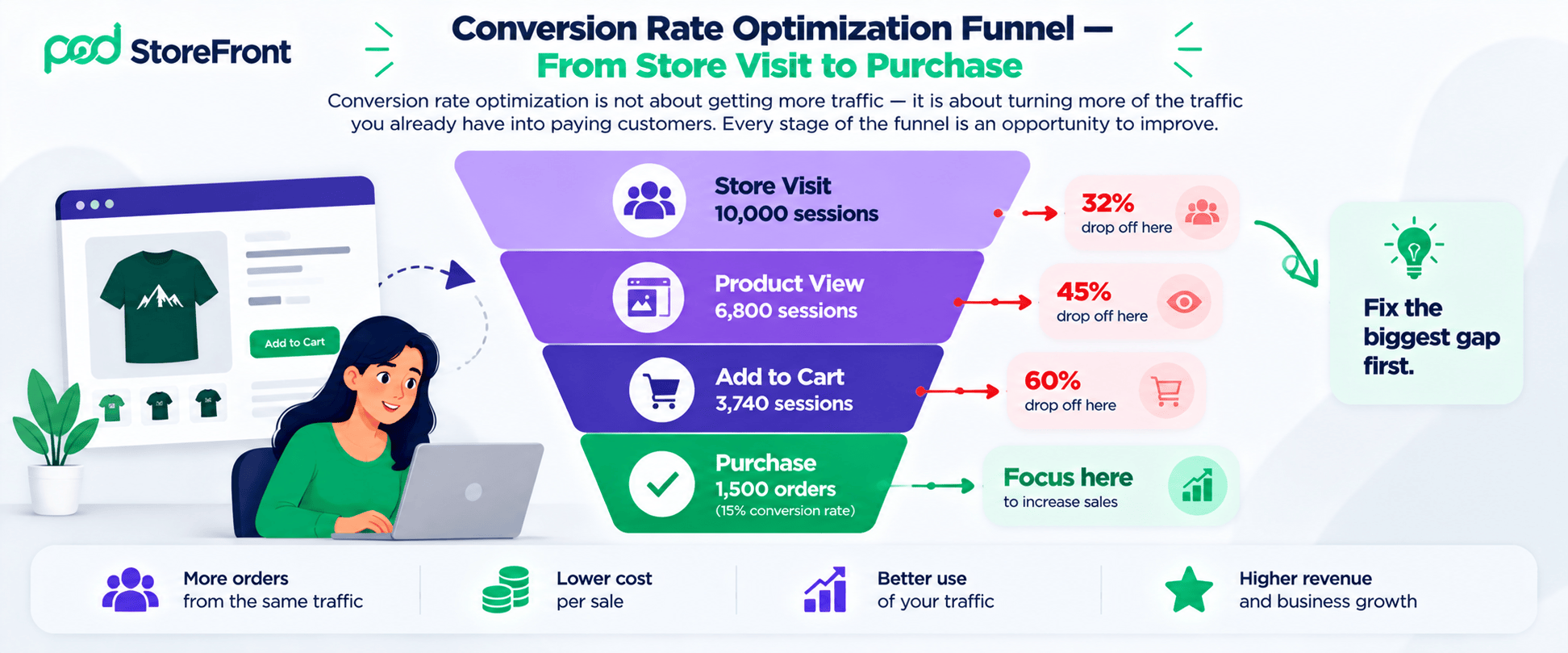
Abandoned cart recovery is the fastest way to win back sales you’ve already earned. These shoppers found your store, picked a product and added it to their cart. Then life happened: a phone call, a surprise shipping fee, a second thought. By most industry estimates, around 70% of online carts are abandoned, so even a small recovery rate adds up quickly.
The good news: you don’t need a big team or a big budget. This guide shows you 7 tactics that actually work, a sample email sequence you can copy, and what to track so you know it’s paying off. We’ll also cover what’s different for custom and print-on-demand stores.
Want to stop carts from being abandoned in the first place? That’s prevention, and it’s covered in our post 13 Proven Ways to Reduce Cart Abandonment on Your Online Store. This post is about what to do after the shopper leaves.
Table of Contents
- What Is Abandoned Cart Recovery?
- Why Abandoned Cart Recovery Is Worth Your Time
- 7 Easy Recovery Tactics
- Recovery for Custom and Print-on-Demand Stores
- A Simple Email Sequence
- How to Measure Your Results
- Mistakes to Avoid
- Quick FAQs
- Ready to Launch a Store Built to Sell?
What Is Abandoned Cart Recovery?
Abandoned cart recovery means following up with shoppers who added products to their cart but left without buying. You use emails, messages, ads and on-site reminders to bring them back to finish the order.
Two things are easy to mix up:
- Prevention fixes your checkout so fewer shoppers leave.
- Recovery wins back the ones who left anyway.
You need both. But abandoned cart recovery is the easier one to start, because it works on shoppers you already have.
Why Abandoned Cart Recovery Is Worth Your Time?
Here’s why store owners keep investing in it:
- They already showed intent. A full cart is the strongest buying signal short of a purchase.
- It costs less than finding new customers. You’re not paying to attract them again. A follow-up email costs very little.
- It teaches you something. Patterns in why people leave show you what to fix in your store.
- It works while you sleep. Set it up once and it runs on its own.
7 Easy Abandoned Cart Recovery Tactics That Work
You don’t need all seven on day one. Start with the first two and add the rest as you grow.
1. Send a 3-email sequence
One reminder is rarely enough. Send the first email within an hour, the second the next day and the third around day three. Each one should do a different job: remind, answer questions, then add a gentle nudge.
2. Put the cart in the email
Show the product image, name and price, then add one big button that goes straight back to the cart. Don’t make shoppers hunt for what they left. Test the link yourself so it opens the cart with the items still in it.
3. Use SMS or WhatsApp, with consent
Short messages get read fast. Send them only to shoppers who have agreed to receive them, keep them to one line and one link, and avoid late-night sends. Treat it as a second channel, not a replacement for email.
4. Offer an incentive later, not first
If your first email already has a discount, shoppers learn to abandon on purpose. Hold the offer for your last email. Free shipping or a small discount works well. Use a unique code that expires, and check it still leaves you a healthy margin.
5. Run retargeting ads
Show shoppers the exact product they left while they browse other sites and apps. Cap how often the ad appears, stop it once they buy and run it for a few days, not forever. Done lightly, it feels like a reminder. Done heavily, it feels like a stalker.
6. Catch shoppers on your site
Offer a “save my cart” option, show a small pop-up asking for an email when someone is about to leave, and greet returning shoppers with a reminder of what’s in their cart. These are quiet, low-effort ways to recover sales before the shopper is even gone.
7. Fix the reason they left
Most shoppers leave for a handful of reasons: surprise shipping costs, unclear delivery times, doubts about returns or worries about trust. Use your second email to answer those questions up front. A short line on shipping, returns and support can do more than any discount.
Abandoned Cart Recovery for Custom and Print-on-Demand Stores
Custom products get abandoned for different reasons. A shopper may spend ten minutes personalizing a mug, then wonder when it will arrive, whether it will print right or whether they can change it later. Here’s how to win those shoppers back:
- Show their design back to them. If your platform lets shoppers save a design, put the mockup in the recovery email. Seeing their own creation is more powerful than a plain product photo.
- Be clear about timing. Custom items are made to order, so say how long production and delivery take, both in the store and in the email.
- Answer print-quality worries. One line about print quality and what happens if something goes wrong builds confidence fast.
- Let them pick up where they left off. If your platform supports it, link straight to the saved design, not the general product page.

A Simple Abandoned Cart Recovery Email Sequence
Copy this structure and adjust the tone to match your brand.
Email 1: The friendly reminder (within 1 hour) Subject: “Still thinking it over?” Keep it short: “You left something in your cart. Here it is, ready when you are.” Add the cart items and one button.
Email 2: The helpful answers (after 24 hours) Subject: “Quick answers before you decide” Cover shipping times, returns and how to reach support. Add a review or two if you have them.
Email 3: The last nudge (around day 3) Subject: “Your cart is about to expire” Add a small incentive with an expiry date, such as free shipping or a modest discount. Make the deadline real.
Stop the sequence the moment the shopper buys, so nobody gets a reminder for something they already ordered.

How to Measure Abandoned Cart Recovery?
Keep tracking simple. These are the numbers that matter:
- Recovery rate: recovered carts divided by abandoned carts, times 100.
- Recovered revenue: the sales that came from your recovery messages.
- Click rate: are shoppers clicking back to the cart?
- Revenue per email: which email in the sequence earns the most?
- Discount cost: how much margin your incentives are costing you.
- Unsubscribes and complaints: a warning sign that you’re sending too much.
Review them monthly, and change one thing at a time so you know what made the difference.
Abandoned Cart Recovery Mistakes to Avoid
- Leading with a discount. It trains shoppers to leave carts on purpose.
- Sending too many messages. Three emails is plenty for most stores.
- A broken cart link. If the button doesn’t return the shopper to their items, the whole email is wasted.
- Ignoring mobile. Most shoppers will open your email on a phone, so check how it looks there.
- Skipping consent. Only send SMS or WhatsApp to shoppers who agreed, and follow the rules for email in your region.
- Sending the same message to everyone. A first-time visitor and a returning customer need different tones.
- Never testing. Try different subject lines and send times, one at a time.
Abandoned Cart Recovery: Frequently Asked Questions
Q. What is a good first step for abandoned cart recovery?
Ans. Start with one automated email sent within an hour of abandonment. It’s simple, cheap and usually your best-performing message.
Q. How many emails should I send?
Ans. Three is a solid starting point: a reminder, an email that answers questions and a last nudge with an incentive.
Q. Should I offer a discount?
Ans. Not in the first email. Try helping first, then offer free shipping or a small discount in your last message.
Q. Is abandoned cart recovery worth it for a small store?
Ans. Yes. Even a small email list and a three-message sequence can bring back sales you would otherwise lose.
Q. Do I need special software?
Ans. Many ecommerce platforms and email tools support recovery messages. Check what your platform offers before adding anything new, and start simple.
Ready to Launch a Store Built to Sell?
Recovery works best on a store that’s built to convert.
With PODStoreFront, you can launch a branded online store with a no-code builder, let shoppers personalize products before they buy, and manage orders, coupons and shipping from one dashboard. Most stores go live in 48 hours, with no developer needed. Use your coupon tools to create unique, expiring codes for your recovery emails, and pair them with the email tool you already like.
Book a demo with PODStoreFront and see how fast you can go from idea to first sale.